Cleaning range is the default on our gutter cleaning cost calculator (HomeGuide and Angi, 2026) for a one-story visit. Kit and labor figures use the same method as our Home Depot gutter guards page. A cleaning visit is the right first step when the guard itself is sound; replacement is the better spend when foam is saturated or a screen is the wrong type for your debris.
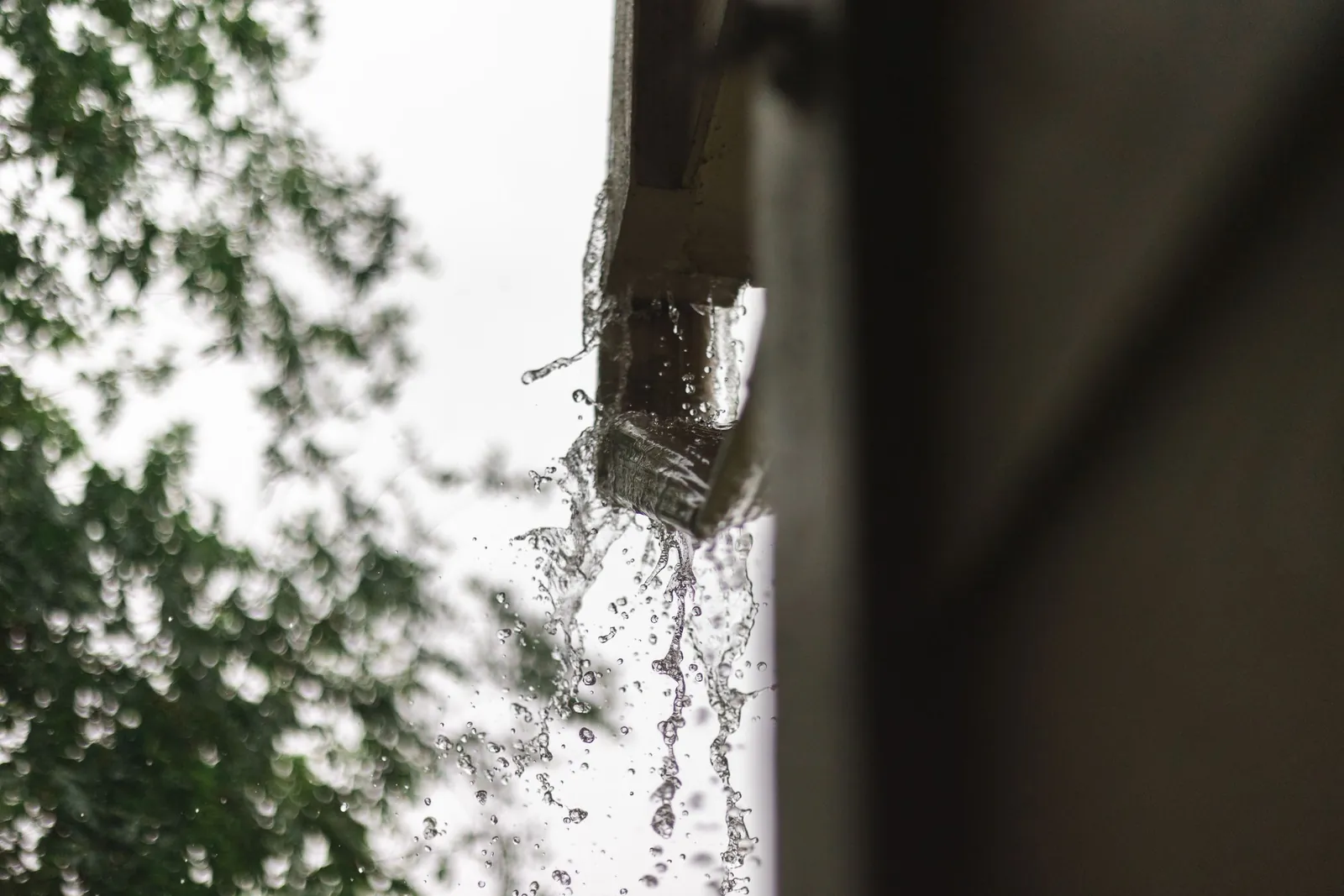
Yes, gutter guards can overflow
Guards reduce how often you clean, but they are not a promise that water will never spill. This Old House (2026) found that most surveyed owners clean less often after installing guards, and still warns that debris can collect on top and block flow. USA Today (August 12, 2026) and Angi make the same point: even a good system needs an occasional check. Overflow in a downpour is usually one of five things.
How to tell what is causing it
| What you see | Likely cause | First fix |
|---|---|---|
| Water sheets over the front along a whole run, especially under trees | Leaves, pollen or grit matted on top of the guard | Brush the surface from a stable ladder, or from the ground with a soft-bristle extension; then rinse |
| Spill is worst at a corner or above one downspout | A clogged outlet, a crushed or blocked downspout, or a sag in the gutter | Flush the downspout; check the drop outlet under the guard |
| It only happens at the peak of a storm, and the guard looks clean | The guard or the gutter cannot take the flow — common with saturated foam and with reverse-curve hoods on a steep roof or valley | Note the guard type; foam or a hood may need replacing, or the gutter may be undersized |
| Water runs behind the gutter, down the fascia or siding | Often a drip-edge or short shingle overhang problem, not the guard | See the drip-edge notes on our gutter installation cost page |
| Overflow started after a new foam or brush insert | The insert is packed or saturated | Pull a section and inspect; plan on replacement if it repeats |
You can often check this from the ground after a storm: look for water marks or fresh mulch-splashes under the eave, and for a downspout that is dry while the gutter is spilling. Our are gutter guards worth it page has a no-ladder clog check.
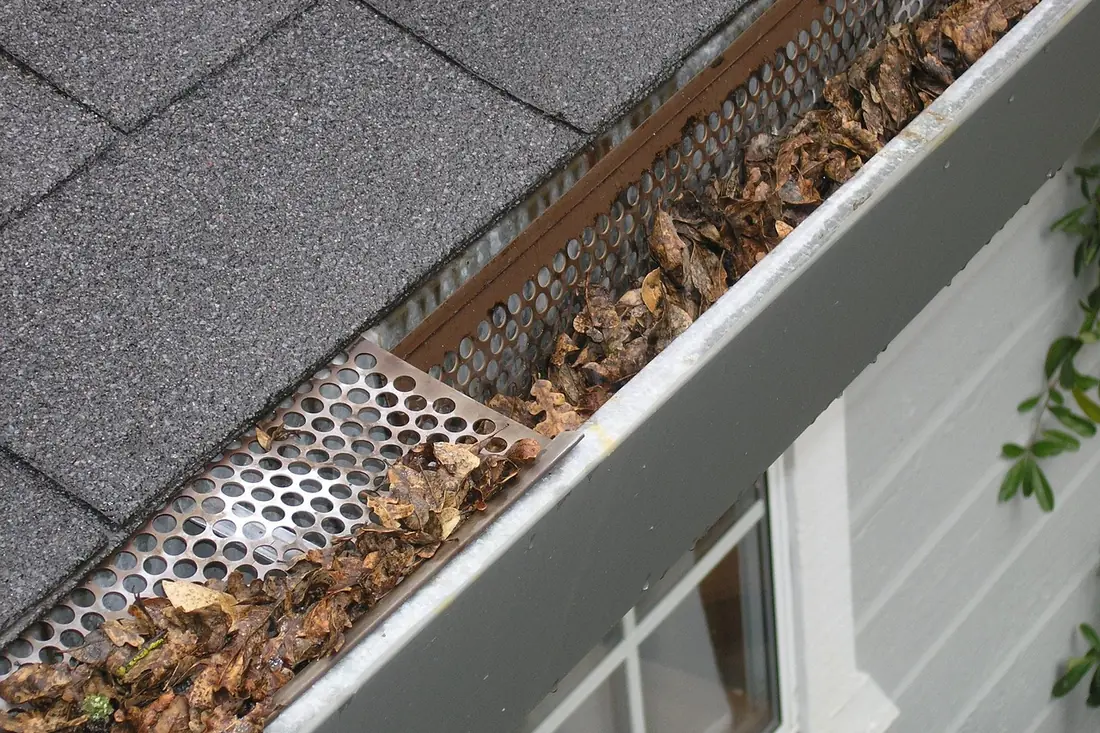
Why each guard type overflows
Foam. Water has to soak through the insert. Once the foam is saturated, or the pores are glazed with needles, seeds and shingle grit, extra rain runs over the front. HomeGuide gives foam a 2- to 5-year life for this reason. It is the guard type we most often suggest replacing rather than living with.
Screens and brushes. Large leaves sit on top and mat when they are wet. Needles and seeds slip through and clog the trough underneath, which you cannot see without lifting the guard. A cleaning may be enough if your trees drop only large leaves.
Micro-mesh. The mesh itself rarely “fails.” Overflow here is usually a dirty surface, a blocked downspout, or a concentrated dump of water from a roof valley. Brushing the mesh and flushing outlets fixes most cases. If a valley still overshoots a clean mesh, the gutter or the number of downspouts may be undersized.
Reverse-curve hoods (LeafGuard, Gutter Helmet and similar). These rely on water clinging to a curve. In a cloudburst, especially on a steep roof, that water can jump the nose. USA Today and other 2026 roundups flag heavy-rain overshoot as a known limit of the design, not always a defect.
What a fix costs
If the guard is the right type and is only dirty, a cleaning visit is typically $90–$270 for a one-story house on our gutter cleaning cost calculator. If foam, a packed brush, or a coarse screen is the wrong product for your trees, replacing 180 feet with stainless DIY kits is about $477.98 in materials (Home Depot mix plus 10%), or $838–$1,558 if you hire the labor, versus $1,080–$2,340 for a standard local install (Angi, October 2026).
A one-story house with sound gutters is a reasonable DIY swap; two- and three-story work is usually safer to hire. Price the swap against years of repeat cleanings on our gutter guard cost calculator.
More on cost and maintenance
- Gutter cleaning costPer-visit and 10-year totals, with and without guards
- Are gutter guards worth it?Payback versus cleaning, plus a no-ladder clog check
- Home Depot gutter guardsKit prices if you are replacing a failed foam or screen
- Gutter guard cost calculatorInstalled prices by type for your house
Common questions
Do gutter guards overflow in heavy rain?
They can. Guards keep debris out of the trough, but water will still spill if the surface is matted, the downspout is blocked, foam is saturated, or a reverse-curve hood cannot take a peak downpour. This Old House, USA Today and Angi (all 2026) all note that guards are not maintenance-free.
Why is water coming over my gutter guards?
First look at where it spills. A whole run under trees usually means debris on top of the guard. A spill at one corner or downspout usually means a clog below. Spill only at the peak of a storm on a clean foam insert or hood often means the product cannot keep up. Water behind the gutter is often a drip-edge issue, not the guard.
Do I still have to clean gutters that have guards?
Yes, but less often. Plan an inspection once or twice a year, and after major storms. Many owners only need to brush the top of a micro-mesh or hood rather than scoop the trough. Foam and coarse screens usually need more frequent attention.
Can foam gutter guards cause overflow?
Yes. Foam works by soaking water through. In a downpour the insert can saturate, and once pores clog with grit or needles the water has nowhere to go but over the front lip. If this happens repeatedly, replacing the foam with micro-mesh is usually the lasting fix.
Will micro-mesh stop the overflow?
It will if the cause was debris getting into the gutter or a foam insert that could not drain. It will not fix a clogged downspout, an undersized gutter, or a missing drip edge. Clean outlets and check capacity before you buy a new system.
How much does it cost to fix overflowing gutter guards?
A cleaning visit is typically $90 to $270 for a one-story house. Replacing 180 feet with stainless DIY kits is about $478 in materials at regular Home Depot prices (plus 10% extra), or about $838 to $1,558 with hired labor. A local contractor install is typically $6 to $13 a foot, or $1,080 to $2,340 for 180 feet.
Is overflowing a sign the guards were installed wrong?
Sometimes. A guard that is not seated, that lifts at the back, or that sits too flat can shed water. So can too few downspouts or a gutter with no slope toward the outlet. If cleaning does not help, have a local installer look at the fit and the drainage, not just the brand.
Is this site connected to any gutter guard brand?
No. Gutter Guard Calculator is independent, has no affiliate links and earns nothing from any brand or store.
Maintenance limits from This Old House, USA Today (August 12, 2026) and Angi (2026). Foam lifespan from HomeGuide (February 4, 2026). Cleaning range as used on this site’s gutter cleaning calculator (HomeGuide and Angi, 2026). Kit prices: Home Depot listings, November 19–27, 2026; labor is this site’s planning method. Photos: Pexels 13307118 (Devin Brown, Pexels License); Pixabay 2434467 (123switch, Pixabay Content License). Brand names are trademarks of their owners. This site is not affiliated with them and earns nothing from them.