How often each type needs cleaning
No guard is maintenance-free. This Old House’s gutter guard maintenance cost guide says so directly, and its 2026 survey of 1,000 gutter guard owners found that most people clean far less than before, not never: about 17% never clean, 41% clean once a year and about 27% clean twice a year (This Old House’s long-term maintenance guide). Homes under pines, acorns or heavy leaf cover are likelier to need the twice-a-year schedule.
| Guard type | Cleanings a year | Pro, per year | DIY, per year | What to look for |
|---|---|---|---|---|
| Micro-mesh | 1 to 2 | $162 | $35–$75 | Pollen, grit or needles filming the top; mesh intact, frame secure, no sediment under the edge |
| Reverse curve | 1 to 2 | $162 | $35–$75 | Front lip clear and water entering; ice at the edge in winter |
| Screen or mesh | 1 to 4 | $162–$324 | $35–$150 | Bent screens, holes, leaves on top, sludge collecting under it |
| Foam insert | 2 to 4 | $324–$486 | $70–$150 | Sagging, discoloring or crumbling foam; mold in damp climates |
| Brush insert | 2 to 4 | $324–$486 | $70–$150 | Debris deep in the bristles; worn or flattened bristles |
This Old House publishes two slightly different schedules, so the table shows the widest range. Its maintenance-cost guide (updated June 18, 2026) lists 1 cleaning a year for micro-mesh and reverse curve, 1 to 2 for screen and 2 to 3 for foam and brush. Its long-term guide (updated October 30, 2026) says once or twice a year for micro-mesh and reverse curve, 2 to 4 for screen and 3 to 4 for foam and brush. Pro costs are This Old House’s, built on its $162 national average per visit and the schedule in its maintenance-cost guide (1 cleaning for micro-mesh and reverse curve, 1 to 2 for screen, 2 to 3 for foam and brush). DIY costs assume you already own a ladder, hose and basic tools.
Do I still have to clean them?
Yes. Guards cut how often you scoop a trough, but they do not make gutters maintenance-free. This Old House says so directly, and its 2026 survey found only about 17% of owners never clean. The rest still brush, blow or rinse — most often once or twice a year.
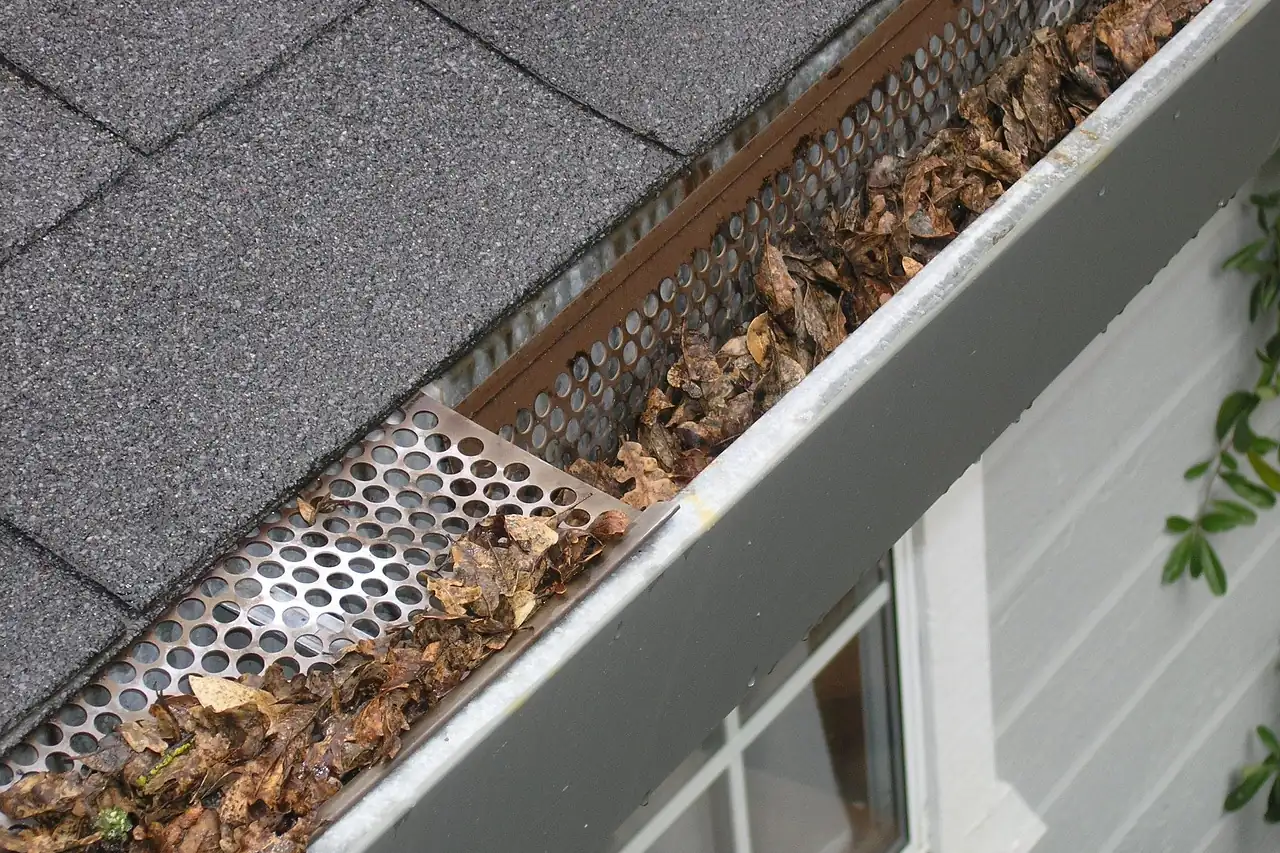
The job usually moves from “muck inside the gutter” to “debris on top of the mesh.” Pine needles, pollen, maple helicopter seeds and shingle grit can film a fine screen until water sheets over it. Homeowners with pines report that needles “do not clean off of the fine metal mesh easily” and that gardens can form on top of the guards. If the top is packed, you can get overflow even when the trough is empty — and some brand warranties treat that as your maintenance, not a covered interior clog (see what LeafFilter’s warranty covers).
Roof valleys need a closer look than a straight run. A valley dumps a concentrated stream onto a short stretch of guard, so needles and leaves pile up there first. After a heavy rain, walk the house and look at valleys and the outlets. More on that failure point is on why gutter guards overflow, and needle-specific advice is on gutter guards for pine needles.
Before you start
Angi’s guide to cleaning gutters with guards (updated July 9, 2026) rates the job “challenging” and puts it at about two hours. Its tool list is an extension ladder with stabilizing arms, a bucket, a garden hose, a screwdriver or cordless drill and gloves. It also recommends a helper who empties the bucket now and then, so the weight does not throw off your balance on the ladder, and it says power washers should only be used from the ground, not from a ladder.
How to clean each type
Micro-mesh
This Old House’s long-term maintenance guide says a garden hose and a soft brush usually do the job on light cleanings. Brush the loose debris off the top, rinse, and while you are there check that the mesh is intact, the frame is secure and no sediment has collected underneath. Fine needles and pollen are the usual culprits; see gutter guards for pine needles.

Screen or mesh with larger holes
Use a gutter scoop or a gentle spray from a pressure washer (This Old House), keeping Angi’s rule in mind that power washing belongs on the ground, not on a ladder. These guards stop leaves and twigs, but small particles pass through. This Old House’s Tom Silva describes a sludge that collects in the gutter by the end of the year, and dirt streaks on the gutter face where water overshot the screen in heavy rain. Both are signs it is time to clean. Check for bent screens and holes while you are up there.
Foam inserts
Remove and rinse them (This Old House says 3 to 4 times a year in its long-term guide). Look for sagging, discoloration or foam breaking down, which means it is time to replace it. In damp climates, mold and mildew are likelier.
Brush inserts
Lift them out, shake out what has settled deep in the bristles and put them back. Replace brushes that look worn or flattened. This Old House does not recommend brush guards near many pine trees, because needles tangle in the bristles. If you are replacing worn inserts anyway, compare gutter guard prices by type before you buy the same kind again.
Reverse curve (hood) guards
Check that the front lip is clear and that water is entering the gutter. Because these systems are often integrated with the roofline, This Old House suggests a professional for inspection and cleaning, which it calls usually the safest option. In snow country, also look for ice at the edge in winter.
The basic steps for guards that lift off
For screens and inserts you can remove, Angi’s guide to cleaning gutters with guards gives this sequence:
- Remove the guards using the manufacturer’s instructions. Angi warns they can crack or break when dislodged.
- Scoop out loose debris with gloved hands or a scoop into a bucket, or onto a tarp below.
- Scrape off sticky buildup with a scraper or spatula.
- Flush the gutters and downspouts with a garden hose. This also shows any clog you missed.
- Refit the guards, then run the hose in dry weather and watch that water reaches the downspouts.
What it costs to have it done
This Old House puts professional upkeep at $162 to $486 a year, depending on guard type and how many visits you need, and DIY at $35 to $150. For a single visit on 180 feet of gutter, using the same HomeGuide and Angi rates as our gutter cleaning cost calculator:
| House (180 ft) | One visit | Two visits a year |
|---|---|---|
| 1 story | $90–$270 | $180–$540 |
| 2 stories | $135–$360 | $270–$720 |
| 3 stories | $225–$450 | $450–$900 |
Rounded to the nearest $5 from HomeGuide’s and Angi’s per-foot rates, before extras. If a cleaner has to lift screens or guards off, HomeGuide says that adds $30 to $80. Flushing badly clogged downspouts adds $60 to $150 (HomeGuide). This Old House’s per-foot average for professional cleaning is $0.70 to $1.30; on a one-story house its table runs from $105–$195 for 150 feet to $140–$260 for 200 feet.
A year of gutter guard care
This Old House’s seasonal checklist, in short:
- Early fall. Clean the gutters and guards and check for sagging or damage. During peak leaf fall they may need weekly clearing. Look for wet debris that could feed ice dams later.
- Winter, in snowy regions. Clear late-fall debris and check attic insulation. Remove snow buildup at roof edges only as needed, and carefully so you do not damage the guards. Be ready for freeze-thaw clogs. You usually do not need to take guards off for winter. See winter gutter guard timing and gutter guards and ice dams.
- Spring. Look for cracked material, loose fasteners and sections that pulled away after freeze-thaw. Clean out pollen and seed pods, and check for nests.
- Mid-summer. A general check. Plastic and vinyl guards can warp or fade from UV exposure.
When to hire a pro
- The house is more than one story. The ladder work is the expensive part, and the risky one. HomeGuide and Angi both lean toward hiring out anything above one story.
- The guards are reverse-curve or built into the roofline.
- You see damage, pests or pulled-away sections (This Old House).
- Check that the company is insured, and ask whether lifting guards is in the price.
Weighing cleaning against guards? Without guards, Angi suggests 1 to 2 cleanings a year for most homes, 2 or more near oaks and about 4 under pines. Our are gutter guards worth it calculator does the payback math, and why gutter guards overflow covers a guard that is clean but still spills.
- Gutter cleaning cost calculatorPrice a visit by feet, stories and extras
- Are gutter guards worth it?Payback against cleaning, and the downsides
- Gutter guards for pine needlesWhich types keep needles out
- Gutter guard cost calculatorEvery guard type, priced for your house
Common questions
How often should you clean gutter guards?
Once or twice a year for micro-mesh and reverse-curve guards, and up to 2 to 4 times a year for screens, foam and brush inserts, according to This Old House’s 2026 maintenance guides. Heavy leaf fall or pine trees push you to the higher end. In its 2026 survey of 1,000 guard owners, about 17% said they never clean, 41% clean once a year and about 27% twice.
Do you have to remove gutter guards to clean the gutters?
It depends on the type. Micro-mesh is usually cleaned in place with a hose and a soft brush, and foam and brush inserts lift out to be rinsed or shaken out. Screens may need to come off for a full clean; Angi’s steps start with removing the guards per the manufacturer’s instructions, and HomeGuide says a cleaner lifting screens adds $30 to $80 to the price.
Can you pressure wash gutter guards?
Be careful. Angi says power washers should only be used from the ground, not from a ladder, and that working by hand is much safer when you cannot reach from the ground. This Old House mentions a gentle spray from a pressure washer for screen guards. A garden hose and a soft brush is the safer default.
How much does it cost to have gutter guards cleaned?
This Old House puts professional guard maintenance at $162 to $486 a year, based on a $162 national average per visit. For 180 feet, our calculator figures about $90 to $270 a visit on one story and $135 to $360 on two. Lifting screens or guards adds $30 to $80 (HomeGuide).
Do I need to clean gutter guards in winter?
Usually not on a schedule. This Old House says you do not usually need to remove guards in winter, but you should clear late-fall debris first, remove roof-edge snow carefully if you must and watch for ice that blocks drainage. If ice dams keep coming back, it recommends a professional evaluation.
Are there gutter guards that never need cleaning?
No. This Old House says no guard is completely maintenance-free: even high-end systems need occasional cleaning and inspection. Fine micro-mesh and reverse-curve guards need it least, but small particles like pine needles and roof grit can still build up.
Do I still have to clean gutter guards?
Yes. This Old House says no guard is maintenance-free, and its 2026 survey found that only about 17% of owners never clean. Most people still brush or blow the top once or twice a year. Pine needles, pollen and maple seeds are the usual reason. See do I still have to clean them.
Do pine needles still clog gutter guards?
They often sit on top of fine mesh instead of falling in, and they can mat until water runs over the guard. Coarse screens and foam are worse with needles. Stainless micro-mesh is the usual DIY choice, but you still have to brush or blow it. Details are on gutter guards for pine needles.
Why do my gutter guards overflow at the roof valley?
A valley concentrates runoff onto a short stretch of guard, so debris piles up there first and water overshoots in a downpour. Clean the valley section first, and do not add a splash guard that traps needles. See roof valley overflow.
Cleaning schedules, costs and survey data from This Old House’s gutter guard maintenance cost guide (updated June 18, 2026) and This Old House’s long-term maintenance guide (updated October 30, 2026; 2026 survey of 1,000 homeowners). Steps and safety from Angi’s guide to cleaning gutters with guards (updated July 9, 2026). Visit prices from HomeGuide and Angi, the same rates as our gutter cleaning cost calculator. All checked November 28, 2026. Photos: Pixabay 2434467 (123switch, Pixabay Content License) and Pixabay 164624 (PublicDomainPictures, Pixabay Content License). These are US planning figures, not quotes. This site is not affiliated with any gutter guard or cleaning company and earns nothing from them.